Williamsburg VA is a destination for history buffs. But Williamsburg has become a bonafide golf destination, too, with more than a dozen courses, designed by figures such as Robert Trent Jones, Arnold Palmer, Jack Nicklaus, and Mike Strantz. The area’ss 11 golf courses, including the Kingsmill Championship LPGA Tour stop at Kingsmill, are gaining even more national recognition. Courses include Ford’s Colony Marsh Hawk Course, Ford’s Colony Blackheath Course, Ford’s Colony Blue Heron Course, Kingsmill River Course, Kingsmill Woods Course, Kingsmill Plantation Course, Kiskiack, Royal New Kent, Stonehouse Golf Club, which was awarded 4 ½ stars by Golf Digest Magazine and Williamsburg National, voted one of the “top 10 places to play in Virginia” by Golf Digest.
Here is a brief rundown of the courses in the Williamsburg VA area :
Kingsmill Resort — River Course
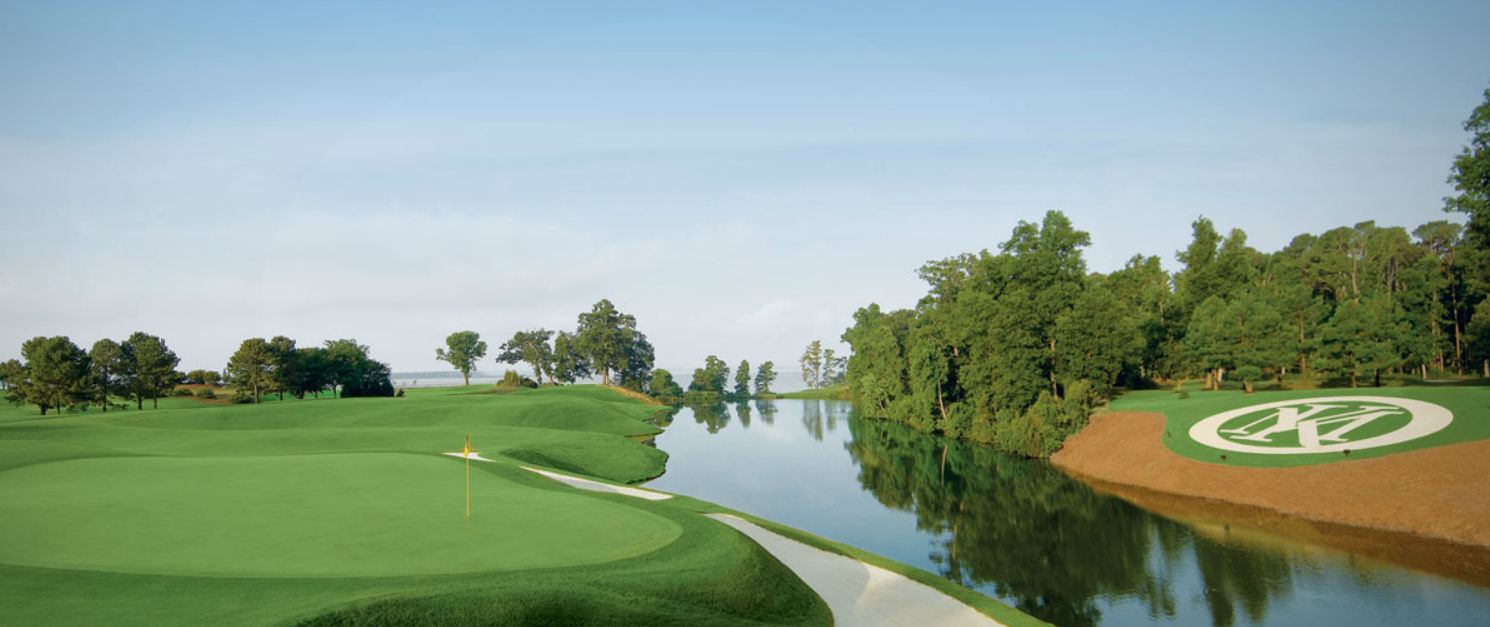
For years the River Course hosted the PGA Tour, and now it hosts the best female golfers in the world annually at the Pure Silk Championship. And a championship golf course it truly is. The front nine weaves you inland before the back nine suddenly presents you at the foot of the James River. Try not to be distracted by all its glory as you finish your round.

Kingsmill Resort — Plantation Course
After a round at the River Course, 18 holes on the Plantation Course will come as a breath of fresh air. It plays about 400 yards shorter than the River track and offers much more scoreability. Designed by Arnold Palmer and Ed Seay, you’ll find more birdies out here.
Club at Viniterra The Club at Viniterra is the newest Rees Jones-designed championship New Kent golf course. As a part of Viniterra, the new upscale residential gated community located in the heart of the New Kent Vineyards development in New Kent County, this spectacular Club offers Richmond golf at its very best. Nestled in a beautifully wooded area between Richmond and Williamsburg, the Viniterra New Kent golf course incorporates a surprisingly wide variety of natural elevations, changing as much as 70 feet from tee to green on several holes. Multiple tee boxes can be found on each hole, usually five or six, to provide the overall yardage and angle-of-play flexibility required for golfers of all skill levels. Depending on which of the tee markers a golfer elects to play, this flexibility allows this Richmond golf course to measure anywhere between 5,300 and 7,600 yards.
A Round to Remember: My Visit to The Club at Viniterra
When I look back on my recent golf adventure, The Club at Viniterra easily stole the show — and honestly, it wasn’t even close.
Maybe it was the early tee time we snagged (hello, cooler temperatures and zero crowds on a Saturday morning!), or maybe it was the perfect balance of holes — some challenging enough to make you sweat, others forgiving enough to make you feel like a pro. Either way, Viniterra had me grinning from the first tee.
First Impressions Matter
Right from check-in, the staff made it clear: this wasn’t going to be your average day on the links. The clubhouse manager not only checked us in but chased us down before our round just to hand us a course guide and a little history book about Viniterra. That’s service you don’t forget. Plus, free coffee and water? Small touches, big impact.
Our starter, gave us some great insider tips at the first tee — which I’m convinced saved me at least three strokes (and probably a wedge or two from a watery grave).
A Course That’s Challenging…But Fair
Viniterra walks the line beautifully: it keeps you on your toes without making you feel totally outmatched (looking at you, Royal New Kent). Sure, there are a few holes where you’ll need to really think through your shots, but you’re also rewarded with a handful of manageable ones if you play smart. And the greens? Absolutely pristine — fast, true, and a lot of fun to putt.
Scenery Worth the Trip
Everywhere you turned, there was something to appreciate — gorgeous homes tucked along the fairways, charming bridges crossing over marshes and streams, and winding cart paths cutting through the woods. It felt more like a nature tour with a side of golf than the other way around.
And speaking of things that deserve a standing ovation: the beverage cart. Yes, the only course on our entire trip that actually had one cruising around. (Big win. Big. Huge.)
Final Verdict
If you’re planning a Williamsburg golf getaway, take my advice: start with Viniterra. The course is welcoming to all skill levels, the design is top-notch, and the staff couldn’t be more accommodating. It really checks all the boxes — and then some.
I can’t wait to go back. And next time, maybe I’ll even par that par 5 over the swamp. (Hey, a golfer can dream.)

Kiskiack’s beautiful surroundings will allow you to unwind, the spectacular views will inspire you, and the challenging layout will awaken your spirit. Kiskiack Golf Club is set on land once occupied by the Chickiack, a group of Virginia Algonquian Indians, under the rule of the Great Chief Powhatan.
Set along the ridge of a natural bluff, Kiskiack offers a day of golf for players of all levels. As our award-winning architect John LaFoy said “after playing Kiskiack, 18 golfers may each have a different favorite hole.” Many of the picturesque holes demand accurate shot-making from tee to green, while others are more forgiving – with ample landing areas and gentle sloping greens.
Golf Digest’s “Places to Play” awarded Kiskiack four stars. The front nine lets you relax as the course winds through mature hardwoods and over natural, rolling hills before a challenging uphill finish along with one of the two lakes that come into play throughout the round. On the back nine, you are challenged by signature Hole 11. This par-‐3 requires accuracy to negotiate a green surrounded by water on three sides and well protected by bunkers.
Here’s a rewritten version for you — this time with the tone of you being a local who knows the area and played Kiskiack:
Local’s Take: Kiskiack Golf Club is a Hidden Gem
As someone who’s lucky enough to call the Williamsburg area home, I’ve played a lot of the local courses over the years — and I have to say, Kiskiack Golf Club completely surprised me in the best way possible.
First Impressions:
From the moment I pulled up, Kiskiack had a welcoming, laid-back feel. The clubhouse has that cozy vibe that instantly makes you feel like you’re in the right place, and the tucked-away pro shop in the back corner was one of the better ones I’ve seen around here — fully stocked and dangerously tempting if you’re a sucker for new gear like I am. The starter was friendly and upfront, letting us know a few areas had been resodded recently. Honestly, you couldn’t tell — the course looked fantastic.
The Gold Tees, playing around 6,700 yards, offered a great balance — not crazy long, but long enough from a few spots to make you think twice about club selection. Definitely a good test without being a marathon.
Course Conditions:
Out of all the courses I’ve played recently, Kiskiack was easily in the best shape. While a few other area courses are fighting the battle with the summer heat, Kiskiack’s grounds crew clearly knows what they’re doing. Everything — fairways, tees, greens — looked green, lush, and just plain sharp.
The Greens:
Now, let’s talk greens: these were fast. Maybe some of the fastest I’ve ever played locally. And it wasn’t just speed — these greens had character. Plenty of tiers, tricky breaks, and enough movement to make even short putts feel like an adventure. On 18, our group had a 10-foot eagle putt… and after four tries, the ball had traveled more miles past the hole than it had toward it. Lots of laughs, and a reminder that downhill putts at Kiskiack are no joke.
Scenery and Layout:
It’s not just the playability — Kiskiack is a beautiful course, too. Ponds, wildlife, mature trees, and some really stunning landscaping make it feel more like a private club than a public course. Standing by the 10th green looking across to the 11th tee and bridge might be one of my favorite views in the area.
Final Thoughts:
For locals and visitors alike, Kiskiack is a must-play. It’s the kind of course you want to keep in your back pocket for when friends come to town and ask where to tee it up. Great layout, great conditions, welcoming staff — and just enough challenge to keep it fun without wearing you out.
Definitely one of the best rounds I’ve had around here in a while. I’ll be back soon — maybe next time I’ll even sink that eagle putt on 18.

Stonehouse Golf Club is just outside of Williamsburg, in Toano off I-64 at exit 227. Great golf course by Mike Strantz. Challenging, but fair off the tee, hilly with big greens, requires good tee shot placement for a shot at scoring. It plays to 6,962 yards, 140 slope, and 75.0 course rating from the tips. and opened in 1995. Steep and sloping fairways, tree-lined, forced carries over ravines, well-bunkered, it’s just a good solid challenge and interesting holes, nothing boring here. Well-conditioned, some houses in play, but not real distracting. Stonehouse is laid over wild, tumbling hills near the York River in the Tidewater Region. When it opened in 1996, The Stonehouse Golf Club was named “Best New Upscale Public Course in the Nation” and one of the “Top New Ten You Can Play” by golf Magazine. The tradition of accolades and awards continues. In 2001, Gold Digest ranked Stonehouse among the top 6 courses in Virginia. Stonehouse is also on Golf Magazine’s “Top 100 You Can Play” and Golf & Travel’s list of “100 Best Modern Courses”

Royal New Kent -Located between Williamsburg and Richmond, Virginia, Royal New Kent is set upon the low hills between Diascund Creek and the Chickahominy River. In 1997, Royal New Kent opened to outstanding reviews and was named “Best New Upscale Public Course in the Nation” by GolfDigest and No. 23 on Golf Magazines’s Top 100 you can play. In 1999, Royal New Kent was named one of “America’s Top 100 Greatest Golf Courses” by Golf Digest. In 2001, Golf Digest ranked Royal New Kent among the top three courses in Virginia, and in 2002 Royal New Kent was awarded 4 1/2 star by Golf Digest.
It was designed by Mike Strantz after the links courses of Ireland, and it’s a great rendition, and much less costly than making the trip across the pond! There’s a lot of the same design elements as you’d find on a traditional links course, open and windy, rolling and rugged terrain, and fairways tumbling and bordered by fall fescue grass. There’s target rocks to provide direction to blind fairways, with deep pot bunkers that usually require a blast back out to the fairway. There’s blind shots to the greens hidden behind grassy knolls, stacked rock walls but the fairways are wide and forgiving, although there’s 120 bunkers scattered in the fairways at some odd intervals and right around the greens. The greens are huge and fast, but do promote the run up shot which is so useful in the British Isle’s links courses. Play the course from the right set of tees and you’ll enjoy the game much more.
Colonial Heritage Golf Club a quality layout at a reasonable rate, at least for the Williamsburg area. It’s on the north side of town, just west of Richmond Highway, off I-64 at Humelsine Parkway. The layout was designed by Arthur Hills, and is routed through an upscale residential community. It’s a parkland style of layout with tree lined fairways, a few holes with water, and a good amount of sand, playing to somewhat large and undulating and sloped greens, which are typically very quick. Tough layout from the tips, a 147 slope from 6,900 yards, the Silver tees at 6,000+ yards are still a good challenge at a 75.9 course rating and 136 slope.

The Club at Brickshire is located midway between Williamsburg and Richmond in New Kent off I-64 at exit 214. It’s an Ault Clark/Curtis Strange design through a residential development that plays to 7,291 yards from the back tees. Good elevation change, parkland style course, usually in good shape, with a lot of variety in the holes. Mostly wide open off the tee, the main feature here are some replica holes from St. Andrews, Augusta National, Pinehurst #2, and Riviera CC.

U. S. Open Champion Curtis Strange has created a unique golfing experience by replicating some of his favorite holes from around the world: St. Andrews, Augusta National, Pinehurst #2, and Riviera CC. You’ll never forget our 15th hole, a wickedly picturesque par 3 that is infamous in the area. Finish in style onour panoramic 18th hole, a dramatic par 5 that was named one of the best finishing holes in the mid-‐ Atlantic.
The Golf Club at Brickshire provides a fair test for golfers of all skill levels with five sets of tees. Yardages extend from 5,151 to a strenuous 7,291, putting every part of your game to the test. With uphill and downhill shots, uneven lies, wetlands, and water, no two holes are even remotely alike. Fairways are wide and generally forgiving. Several fairways have a decided tilt, so the black and white aiming posts should be well heeded.
Williamsburg National Golf Club is on the west side of Williamsburg, off Monticello, routed through a residential community, and two 18 hole championship courses, reasonably priced compared to some of the other high end courses in the area. They’ve challenging through the trees, well maintained, and good guest service. There’s were some unique holes, and some back and forth, overall a good experience.The Jamestown is a Nicklaus design of 7,000 yards, .Black 73.1/128. The York Town course also plays to 7,000 yards from the tips, and was designed by Tom Clark. If I were only playing one course here, it would be the Nicklaus course.
Golden Horseshoe Golf Club with two fantastic 18-hole courses as well as its nine-hole, they call it “executive course.” The Gold Course is the old classic stable here, designed by Robert Trent Jones Sr. It’s layout is over rolling hills, with tree-lined fairways with water, and forced carries across ravines in play, tight course with a lot of elevation change, playing to large sculptured and contoured greens that are fast. The Green Course was designed by Rees Jones, and it is a more traditional resort course with open fairways and mounding, and is a lot easier on your game, on basically the same land as the Gold course.

Ford’s Colony is just off the 234 exit of I-64, then west on 199 to Rt 60/Centerville Road, a couple of miles. Three 18 hole championship golf courses here routed through a huge residential community of upscale homes, along with a Marriott timeshare development. The rates are reasonable for the area. The courses, Marsh Hawk, Black Heath, and Blue Heron are all somewhat similar in the layout, tree-lined fairways, marsh, lake, and creek bordered, well-bunkered, and at different levels of challenge.

Ford’s Colony — Blackheath
The most picturesque golf course at Ford’s Colony presents many challenges to golfers of all abilities with water coming into play on 13 holes, a total of 9 doglegs and bunkers guarding every green. Elevations changes and the prevailing winds make this course play a lot longer than the 6,621 yards stated on the scorecard.
The best example of Blackheath’s beauty can be found when standing on the 12th tee. You are looking straight down to the green and must carry water the entire way. If you turn to your left, you will look down the 16th fairway and an intimidating tee shot that you will have to hit later in your round.
The eighteenth hole, a short par 4 with an island green best describes the challenges found on the Blackheath golf course. Water protects the entire left side of this hole, forcing you to hit an accurate shot to the fairway. Your approach shot is the most intimidating shot at Ford’s Colony, because you are hitting to an undulating green that is completely surrounded by water. Par is a great finish on Blackheath.
Ford’s Colony — Blue Heron
Blue Heron is a favorite of many of our guests and members with its long and challenging par 3’s, fair and forthright par 4’s and intimidating par 5’s. Blue Heron provides some room for error off of the tee, however makes up for the easy with its well protected greens. Set among Virginia’s dense wetlands, this unique setting is home to many different birds, fish and other aquatic life.
Ford’s Colony — Marsh Hawk
The Marsh Hawk provides a very different challenge than our Blue Heron course. Tight tree-lined fairways mean you better bring your “A” game. This par 72 course measures 6,650 yards from the back tees and features undulating greens and the best finishing holes around. Take a journey with us as you play around natural lakes and elevation changes.. Kingsmill, saving the best for last, Kingsmill is a golf resort and upscale residential community, south of Williamsburg on the James River. The River Course is twice as expensive as the Plantation and the Woods course, but it is the PGA Tour course venue, and designed by Pete Dye, a tough, challenging layout in a pristine setting, and always in great shape. The Plantation course is an Arnold Palmer design with some of the same elements as the River course, just not on the River, but water comes into play on at least half the holes. The Woods course was designed by Curtis Strange and Tom Clark and is a classic parkland style with tight tree lined fairways, and is the newest, and maybe the toughest of the three.
Two Rivers Country Club @ Governors Land– WILLIAMSBURG’S ONLY PRIVATE GOLF COMMUNITY Designed by three-time Golf Architect of the year, Tom Fazio, Two Rivers golf course is the only private community golf club in Williamsburg, Virginia. Sculpted to take advantage of the natural contours and beauty of the area, the golf course at Two Rivers is the perfect blend of earth, water, forest and lush greens. Year Round Golf. Two River’s golf course offers an enjoyable challenge for golfers of every level of skill as you play through shady hardwood forests and tidal marshlands, past crystal lakes, across open expanses of nature and along 1000 yards of dramatic river frontage facing due west. Rated as one of Virginia’s Top 10 courses by Golf Digest, every hole is distinctly different and offers some of the most breathtaking scenery imaginable.

Kiln Creek is in Newport News, off I-64 at the VA 171 exit, just south of the Newport News Airport. It’s a resort with accommodations, a little tired and dated from the looks of it, but you don’t have to stay there to play the golf course. It was was designed by Tom Clark in the late 1980′s, routed through an established residential neighborhood with houses lining the holes, a good amount of water in play, and well bunkered.
Newport News Golf Club is off I-64 at exit 250, Fort Eustis Blvd., then east to the golf course about a mile. There’s two 18 hole parkland style of layouts at Deer Run, both designed by Ed Ault in the 1960′s. The Deer Run is the stronger of the two courses, playing to over 7,200 yards from the tips with a 133 slope. The Cardinal is more forgiving at a 118 slope from the 6,600 yard tips. Both layouts are parkland style, routed through the trees with natural corridors, and no homes or development in play